Expert Stove & Oven Repair in Reading, MA
Appliance Repair for Homes & Businesses in Reading, North Reading, Massachusetts and Nearby Areas
Stove and Oven Repair in Reading, Massachusetts | Appliance Repair Pros
The kitchen is the heart of the home and the stove is the engine that keeps it running. Whether you are preparing a large holiday feast or simply boiling pasta for a Tuesday night dinner you rely on your range to perform safely and consistently. When a burner fails to light or the oven refuses to heat up it disrupts your entire meal plan and adds unnecessary stress to your day. At Appliance Repair Pros we understand that a broken cooking appliance is an urgent matter. We provide professional stove and oven repair in Reading, Massachusetts, and the surrounding communities. We help homeowners who are dealing with uneven baking, gas burners that click endlessly, and electric cooktops that stay cold. Whether you are in a historic home near the center of Reading or a newer condo in North Reading our team is ready to get you back to cooking.
Our technicians are trained to handle the specific challenges found in Reading kitchens. We work on everything from vintage gas ranges in older properties to modern induction cooktops in renovated spaces. We understand how local power fluctuations or gas line pressure can impact appliance performance. We approach every service call with a commitment to careful diagnostics and respectful work habits. We treat your kitchen with care and ensure we identify the root cause of the problem before we begin any repair work. From faulty igniters to complex control board failures we have the expertise to fix the issue correctly. Reach out to us for assistance.
Stove and Oven Repair Services in Reading
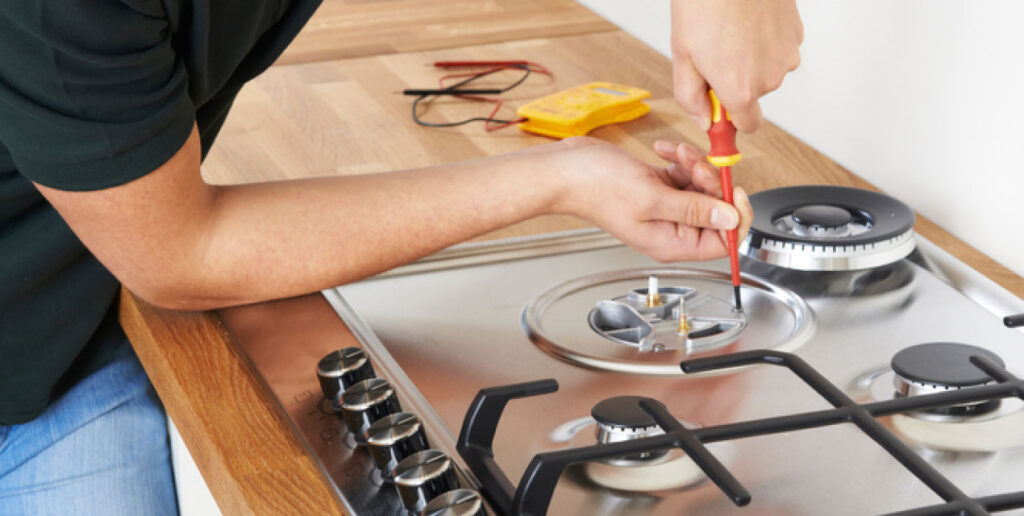
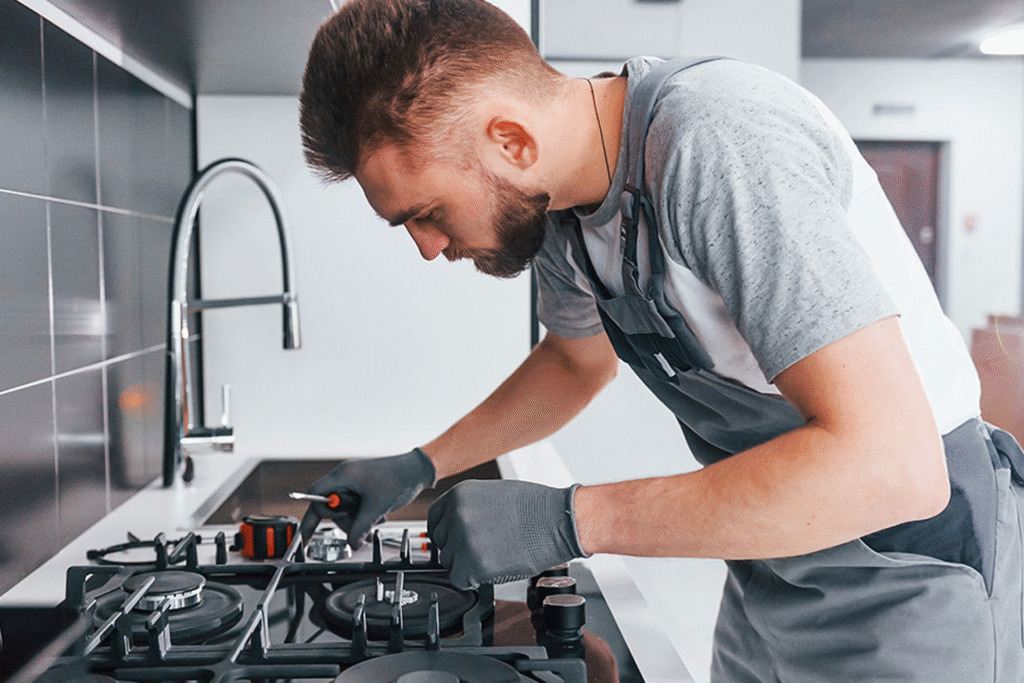
Cooking appliances come in many forms and fuel types. Repairing them requires a deep understanding of electricity, gas flow, and thermodynamics. When you hire us for oven service in Reading you are getting a team that respects the safety protocols required for these high heat appliances. We do not just swap parts. We inspect the safety valves, the ventilation, and the electrical connections to ensure your family is safe.
Oven and Stove systems we work on:
- Gas ranges and cooktops
- Electric coil and smooth top ranges
- Wall ovens (single and double)
- Induction cooktops
- Dual fuel ranges
- Slide in and freestanding units
- Convection ovens
- Warming drawers
What makes stove and oven repair tricky:
- High voltage circuits in electric units
- Combustible gas management and leak detection
- Hidden spark modules and ignition wiring
- Calibrating temperature sensors for accuracy
- Ceramic glass top removal and handling
- Electronic control boards exposed to high heat
- Safety interlocks on self clean latches
Common Stove and Oven Problems We Fix
Cooking appliances usually exhibit clear symptoms when they are malfunctioning. Recognizing these signs early can prevent a small issue from becoming a safety hazard. We have categorized the most common issues we see in Reading homes to help you understand what might be going wrong with your appliance.
Gas Burner Will Not Light
You turn the knob and hear the clicking sound but the flame never appears. Or perhaps you do not hear any clicking at all. This is the most frequent issue with gas ranges. It stops you from cooking on the stovetop and can be incredibly frustrating when you have a pot of water ready to boil.
- Clogged burner ports blocking gas flow
- Wet or dirty spark electrode
- Failed spark module
- Defective ignition switch harness
- Faulty gas regulator
- Air in the gas line
How we diagnose it: We observe the spark quality to see if it is blue and strong or yellow and weak. We test the continuity of the ignition switches and inspect the burner caps for grease buildup. We also verify that gas is reaching the valve.
What you can do right now: Remove the grate and the burner cap. Check if the small holes in the burner head are clogged with spilled food. Clean them gently with a toothbrush or a needle. Ensure the area is dry.
Oven Will Not Heat Up
You set the oven to bake but it stays cold. On a gas oven you might smell gas but see no glow. On an electric oven the elements remain black. This total failure to heat usually points to a break in the ignition or heating circuit.
- Weak or broken bake igniter (Gas)
- Burnt out heating element (Electric)
- Tripped thermal safety fuse
- Broken wire in the power supply
- Failed main control board relay
- Incorrect voltage reaching the outlet
How we diagnose it: For gas units we check the amperage draw of the igniter. If it is too weak the gas valve will not open. For electric units we test the resistance of the heating element and verify 240 volts are present at the terminal block.
What you can do right now: Check your home circuit breaker. Electric ovens run on a double breaker and sometimes only one half trips leaving the lights on but the heat off. Reset the breaker fully.
Uneven Baking or Temperature Issues
Your cookies are burnt on one side and raw on the other. Or perhaps the roast takes an hour longer than the recipe says. Temperature inconsistency ruins meals and wastes ingredients. This is rarely user error and often a calibration or airflow issue.
- Failed temperature sensor or thermostat
- Convection fan motor failure
- Blocked airflow vents in the oven floor
- Door gasket not sealing properly
- Calibration drifted over time
- Warped baking racks or oven floor
How we diagnose it: We measure the internal temperature of the oven over time using a digital thermocouple to see how it cycles. We test the resistance of the sensor at room temperature. We also inspect the door hinges and seal for gaps.
What you can do right now: Check the rubber seal around the oven door. If it is torn or hanging loose heat is escaping. Also ensure you are not covering the bottom of the oven with aluminum foil which blocks airflow.
Electric Cooktop Element Not Working
One specific burner on your glass top or coil stove stops working while the others are fine. This limits your cooking space. On glass tops it can be hard to tell if the element is broken under the surface.
- Burned out ribbon element
- Defective infinite switch (the knob)
- Loose wire connection
- Surface element limiter failure
- Damaged receptacle block (coil stoves)
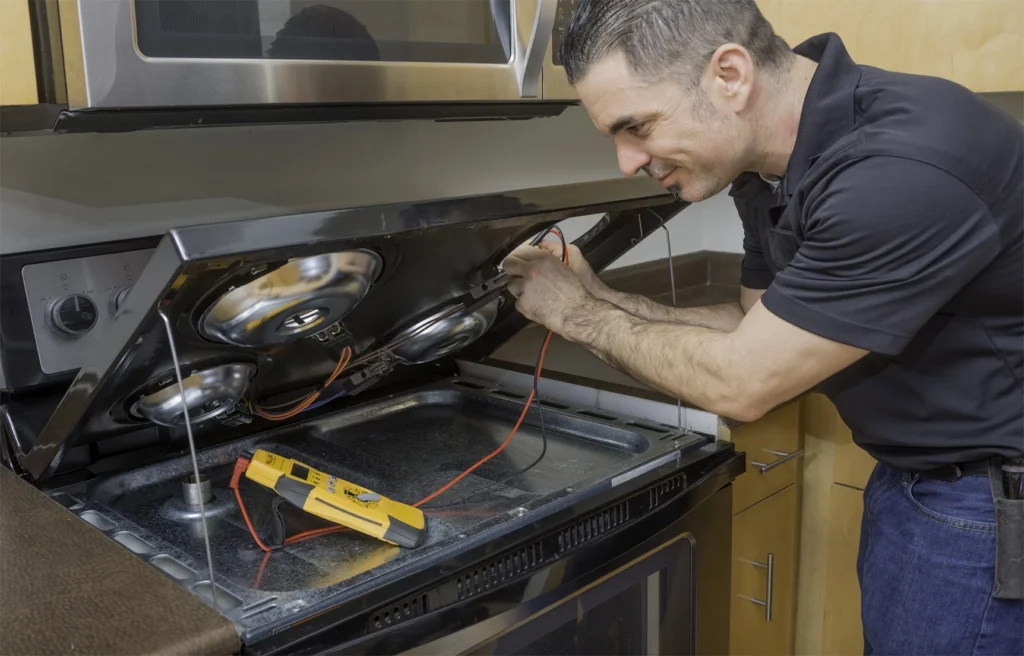
How we diagnose it: We access the components under the glass or lift the top. We test the continuity of the element itself. If the element is good we test the switch to see if it is sending power when turned on.
What you can do right now: If you have a coil stove try swapping the non working element with another one of the same size that works. If the problem follows the coil the coil is bad. If the problem stays at the spot the switch or receptacle is bad.
Oven Door Locked and Will Not Open
This often happens after a self clean cycle. The door locks for safety during high heat but sometimes the latch fails to release after the oven cools down. This leaves your dinner trapped inside or prevents you from using the oven at all.
- Failed door lock motor assembly
- Warped latch hook
- Control board not sending the unlock signal
- Temperature sensor reading too high
- Wiring melted during self clean
How we diagnose it: We access the lock mechanism usually from the top or back. We manually test the motor and check the switches that tell the computer if the door is locked or unlocked.
What you can do right now: Do not force the door open as you will break the glass or the latch. Try running a short self clean cycle again and cancelling it after one minute to see if it resets the lock motor.
Gas Smell During Operation
Smelling a faint whiff of gas when you first light a burner is normal. However smelling gas constantly while cooking or when the unit is off is a serious safety concern. This requires immediate professional attention.
- Leak at the pressure regulator
- Valve seal failure
- Igniter taking too long to light the gas
- Loose connection at the gas supply line
- Burner not burning clean (yellow flame)
How we diagnose it: We use an electronic combustible gas detector to sniff for leaks around all joints and valves. We also observe the flame pattern to ensure complete combustion.
What you can do right now: If the smell is strong turn off the gas supply valve behind the stove immediately and open windows. Do not use the appliance until it has been serviced.
Glass Cooktop Cracked or Shattered
A heavy pot dropped on a ceramic glass cooktop can cause a crack. Even a small crack allows liquids to seep into the high voltage electrical components below creating a shock hazard.
- Impact from dropped cookware
- Thermal shock from cold water on hot glass
- Using cast iron or rough pans
- Overtightened installation screws
How we diagnose it: This is a visual diagnosis. We inspect the extent of the damage to see if it has affected the elements below.
What you can do right now: Stop using the cooktop immediately. Do not cook on a cracked surface. Tape over the crack to prevent moisture ingress if you must wait for a repair but disconnecting power is safer.
Control Panel or Display Not Working
The oven might work but you cannot see the temperature or set the timer. Or the buttons might be unresponsive to touch. Electronic glitches are common in modern computerized ranges.
- Loose ribbon cable connection
- Main control board failure
- Touchpad membrane shorted out
- Transformer failure
- Moisture damage from steam
How we diagnose it: We check for low voltage power coming from the transformer. We inspect the ribbon cables for corrosion. We verify if buttons are stuck in the pressed position.
What you can do right now: Try unplugging the stove or flipping the breaker off for five minutes. This performs a hard reset on the computer which can sometimes clear a temporary glitch.
Safety Notes for Stove and Oven Issues
Stoves and ovens involve high heat, electricity, and often flammable gas. This combination demands respect. While we are trained to work safely on these units homeowners should be aware of specific danger signs.
If you see these safety events do this first:
- Strong rotten egg smell: This indicates a natural gas leak. Leave the house immediately and call your gas utility provider from outside. Do not touch light switches or use the phone inside.
- Electrical sparking or arcing: If you see sparks coming from a burner or the back of the unit turn off the circuit breaker at the main panel immediately.
- Yellow or orange flames: Gas flames should be blue. A lazy yellow flame indicates incomplete combustion which can produce carbon monoxide. Open a window and stop using the burner.
- Glass top crack: If the glass cracks shut off the power at the breaker. Spilled liquid can conduct electricity from the elements below to the pot you are touching.
Brands We Service for Stove and Oven Repair in Reading
The market is filled with various brands that use different ignition systems and control logic. We have the technical data and experience to service the wide range of cooking appliances found in Reading homes.
Whirlpool family and similar designs (Whirlpool, Maytag, KitchenAid, Amana)
These are the workhorses of the American kitchen. They are generally very reliable and parts are readily available. We often see them for igniter replacements on gas units or infinite switch failures on electric units. The AquaLift self clean technology on newer models also requires specific knowledge to troubleshoot.
Common issues we see with these models:
- Gas oven igniters wearing out
- Control board relays failing
- Spark module clicking continuously
- Door hinge springs breaking
- Glass cooktop element limiting switches failing
Why correct diagnosis matters: Whirlpool uses a specific type of spark system. Misdiagnosing a bad ground wire as a bad module is a common mistake that leads to unnecessary parts replacement.
GE family (GE, Hotpoint, and related lines)
GE ranges are known for their robust build quality. We service standard GE models as well as the high performance Café and Monogram lines. These units often have complex wiring diagrams and dual fuel configurations that require expert attention.
Common issues we see with these models:
- Meat probe jack failures
- Oven sensor calibration drift
- Burner caps becoming warped
- Touchpad membrane peeling or failing
- Convection fan noise
Why correct diagnosis matters: GE ovens use a safety circuit that involves the door lock. If the lock switch is slightly out of alignment the oven will not heat. We know how to adjust these switches precisely.
Samsung and LG
These brands bring high tech features like dual doors and smart connectivity to the kitchen. They often use multiple circuit boards and complex temperature management systems. Repairing them requires a technician comfortable with digital diagnostics.
Common issues we see with these models:
- Temperature sensor errors
- Relay board failures causing no heat
- Knob shafts breaking
- Uneven baking in large capacity ovens
- Touchscreen freezing
Why correct diagnosis matters: Samsung gas ranges typically use a different type of igniter than older American brands. Using the wrong generic part will result in the oven not lighting properly.
Frigidaire and Electrolux
Frigidaire is known for simple effective designs while Electrolux offers more premium features. We frequently work on their induction cooktops and slide in ranges. They are generally easy to service but have some specific quirks with their control boards.
Common issues we see with these models:
- Surface element indicator lights staying on
- Bake element burning out
- Clock display fading or dimming
- Induction burner showing “E” codes
Why correct diagnosis matters: On Frigidaire electric ranges a surface element that stays on high heat is usually a bad switch not a bad element. Replacing the element will not fix the dangerous overheating issue.
Premium and Specialty Brands (Wolf, Viking, Thermador)
We also service high performance ranges found in gourmet kitchens. These units are built differently with heavy duty components and commercial style designs. They require specialized tools and a deeper understanding of gas pressure and airflow.
Common issues we see with these models:
- Spark ignition modules failing
- Door hinges seizing up
- Thermostat failures requiring re-greasing
- Infrared broiler not lighting
Why correct diagnosis matters: These units are investments. We ensure that any repair maintains the integrity and performance of the appliance using the correct grade of parts.
Common Warning Signs and What They Usually Mean
Stoves and ovens often display error codes or specific behaviors to tell you something is wrong. While digital codes vary by model the general warning signs are universal. Understanding these can help you describe the problem when you call us.
- F-Codes (F1, F3, F9): These almost always indicate an electronic failure or a sensor issue. F1 is often a stuck key on the pad. F3 is usually an open sensor circuit.
- Clicking without lighting: This means the spark is happening but gas is not present or the spark is in the wrong place.
- Gas smell with no flame: The valve has opened but the ignition source failed. This is dangerous.
- Element staying red hot: This indicates a “runaway” condition where the control switch has shorted closed.
- Oven light staying on: The door plunger switch is likely broken or the door is not closing fully.
- Long preheat times: A gas oven taking 20 minutes to reach 350 degrees usually has a weak igniter that is barely opening the safety valve.
Maintenance Tips for Stove and Oven Owners in Reading
Keeping your range clean and well maintained is the best way to prevent breakdowns. Given that Reading homes often see a lot of cooking especially during holidays a little care goes a long way.
- Clean spills immediately: Acidic foods like tomato sauce or lemon juice can eat through the enamel on the oven floor. Wipe them up once the oven is cool.
- Keep gas ports clear: If a pot boils over check the burner holes. A clogged port causes uneven heating and can damage the igniter.
- Do not use foil on the bottom: Covering the oven floor with foil blocks airflow and can cause the heating element to overheat and fail. It can also melt onto the surface permanently.
- Check the door gasket: Periodically feel the rubber seal around the door. If it is brittle or cracked replace it to keep heat inside and protect the control knobs from melting.
- Clean the hood filter: A grease filled vent hood restricts airflow and can be a fire hazard. Wash the metal mesh filters in the dishwasher.
- Use the right cookware: On glass tops use flat bottomed pans. Warped pans cause hot spots and can scratch the glass.
- Exercise the self clean with caution: The self clean cycle puts extreme stress on the oven components. We recommend manual cleaning for longevity.
- Check for anti tip bracket: Ensure your range is secured to the floor or wall with an anti tip bracket to prevent it from falling forward if weight is applied to the open door.
Service Area for Stove and Oven Repair in and Around Reading, Massachusetts
We are proud to provide local service to homeowners throughout Reading and the immediate surrounding communities. We understand the local area from the historic district to the newer developments near the highway. We travel to you fully equipped to handle your repair needs.
We serve the following nearby areas:
- Reading
- North Reading
- Wakefield
- Lynnfield
- Stoneham
- Woburn
- Wilmington
- Andover
- Saugus
Zip codes we serve: 01867, 01864
Frequently Asked Questions
Why does my gas oven take so long to heat up?
This is a classic sign of a weak igniter. In a gas oven the igniter must get hot enough to glow white hot and draw a specific amount of electrical current. This current opens the gas safety valve. As igniters age they glow but do not get hot enough to open the valve quickly causing long delays. Replacing the igniter usually restores performance immediately.
Can you replace the glass on my cracked cooktop?
Yes we can. However the glass top is often the most expensive part of the appliance. We will verify the availability of the specific glass for your model and help you decide if it makes sense to repair it or if replacing the unit is a better option. If you choose to repair it we can perform the replacement safely ensuring all seals are watertight.
Is the self cleaning cycle safe to use?
The self clean cycle heats the oven to extremely high temperatures to burn off residue. While it is a convenient feature it puts significant thermal stress on the electronics, the door latch, and the thermostat. We often see ovens fail right after a self clean cycle. We recommend using the “steam clean” function if available or cleaning manually with mild detergents to extend the life of your oven.
My electric burner works but only on high heat. Can you fix this?
Yes this is a common failure of the infinite switch behind the control knob. Inside the switch a contact has likely welded together preventing it from cycling on and off to regulate the temperature. We can replace the switch to restore full temperature control to your burner.
What is that noise my induction cooktop makes?
Induction cooktops naturally make a low humming or buzzing sound. This is the magnetic field vibrating the pan. However if the noise is very loud or sounds like a fan rattling it could indicate a cooling fan failure or loose internal components. We can inspect it to ensure the electronics are being cooled properly.
Do you repair dual fuel ranges?
Absolutely. Dual fuel ranges combine a gas cooktop with an electric oven. They offer the best of both worlds but have two distinct systems to maintain. Our technicians are trained on both gas and electric systems making us perfectly suited to handle these complex appliances.
Why is my oven baking unevenly?
Uneven baking is often caused by a failing convection fan that is not circulating air or a thermostat that has drifted out of calibration. It can also be a result of a weak heating element that is only working intermittently. We use digital tools to map the temperature inside your oven and identify the culprit.
Do you offer stove repair near me in Reading?
Yes we are a local service provider covering Reading and the surrounding towns. We are likely already in your neighborhood servicing other homes. Being local allows us to respond efficiently to your needs.
My oven door fell off or hangs loosely. Can it be fixed?
Yes usually. Heavy oven doors rely on hinges and springs to stay closed. Over time these hinges can bend or the springs can snap. We can replace the hinge assemblies to ensure the door closes tightly again. A tight seal is crucial for maintaining temperature and preventing heat damage to the control panel.
Is it worth repairing an older range?
Older ranges are often built with simpler more durable components than modern units. If the body is in good condition and parts are available repairing an older stove is often a great choice. We can inspect your unit and give you an honest assessment of its condition and expected remaining life.
Conclusion
A broken stove or oven disrupts your daily life and makes mealtime a hassle. At Appliance Repair Pros we are dedicated to solving these problems efficiently for homeowners in Reading, North Reading, and the surrounding areas. We combine local knowledge with technical expertise to provide repairs you can trust. Whether you have a gas ignition issue, a broken electric element, or a complex control board failure we have the tools to fix it. Reach out to us for assistance.